
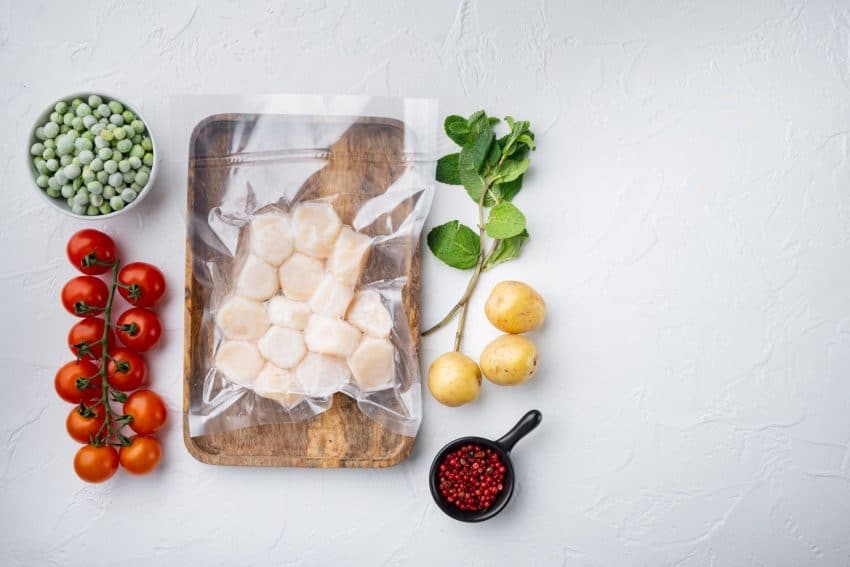
Retort pouches have quietly become a cornerstone of shelf-stable packaging for foods and beyond. Compact, lightweight, and able to deliver long shelf life without refrigeration, retort pouches combine convenience with industrial-scale food safety. In this text we’ll explain what a retort pouch is, how it works, what it’s made of, and the practical pros and cons you need to weigh when considering it for your product or supply chain. Expect actionable guidance on selection, processing, and real-world applications.
What Is A Retort Pouch And Why It Matters
A retort pouch is a flexible laminate package designed to withstand high-temperature, high-pressure thermal processing (retort) after it’s been filled with food or other products. Originating in the 1960s for military rations and emergency foods, retort technology has evolved into a mainstream packaging option for ready-to-eat meals, pet foods, sauces, and more. Unlike traditional cans or glass, retort pouches combine the barrier properties needed to prevent spoilage with a low profile and lighter weight, making them attractive for logistics, shelf display, and consumer convenience.
Why it matters: retort pouches let manufacturers produce shelf-stable products that retain taste, texture, and nutritional value without refrigeration. That brings cost savings in transport and storage and opens new markets (outdoor, emergency preparedness, single-serve convenience). From an innovation standpoint, retort pouches enable product forms and formats, like flat pouches, spouted pouches, and multi-compartment pouches, that cans simply can’t match. For brands seeking differentiation and sustainability gains, the retort pouch is often a strategic choice.
How Retort Pouches Work
Retort processing combines filling and then subjecting the sealed package to pressurized steam or water at temperatures typically between 116–130°C (240–266°F) for a time necessary to achieve commercial sterility. The pouch must withstand these conditions without delaminating, rupturing, or allowing microbial contamination.
Mechanically, the pouch’s multi-layer structure provides both barrier protection and mechanical strength. During retorting, heat penetrates the product through the pouch walls: processing time is determined by the slowest-heating point inside the package, often the center of a dense product. We must account for thermal death time (F0 value) to ensure pathogens, particularly Clostridium botulinum spores in low-acid foods, are inactivated.
Practically, retort systems are either batch or continuous (e.g., rotary retort, steam-air, or water immersion with agitation). Continuous systems improve throughput and often reduce thermal overprocessing, preserving quality. For any production line, matching pouch geometry, fill level, and retort cycle is critical to predictable results.
Retort Pouch Materials And Construction
Retort pouches rely on engineered laminates or trims of plastic and metalized films that balance barrier performance, heat resistance, and sealability. Construction choices directly affect shelf life, processing windows, and recyclability.
Layer Materials And Their Functions
Typical layer functions include:
- Inner heat-sealable layer (often polypropylene or specialized polyolefin), provides a hermetic seal and must be compatible with hot filling and sealing equipment.
- Structural polymer layer (polyester/PET), contributes tensile strength, dimensional stability, and printability.
- Barrier layer (aluminum foil or metalized PET), provides oxygen, moisture, and light barrier essential for long shelf life: foil offers excellent barrier but complicates recycling, while metalized films give moderate barrier with lighter weight.
- Outer print layer (PET or oriented film), protects printed graphics and resists abrasion.
Manufacturers sometimes use co-extruded films or peelable seals for specific applications (e.g., ready-to-heat meals where resealability or easy opening is desired).
Sealing Methods And Package Design Considerations
Heat-sealing quality is non-negotiable. We typically use heat-seal jaws or rotary form-fill-seal machines calibrated for dwell time, temperature, and pressure to produce consistent seals. Sealant selection must match the retort temperature profile, some sealants maintain integrity at 130°C, others degrade.
Package design factors include pouch shape, gusseting, headspace, and fill viscosity. Flat pouches heat differently from stand-up pouches: thick viscous fills create slower heat penetration. Fill orientation (vertical vs. horizontal) during retort can alter heating patterns, so validation trials are essential.
Thermal Processing And Compatibility With Fill Types
Compatibility depends on product acidity, particulate size, and rheology. High-acid foods (pH <4.6) require milder thermal treatments than low-acid foods. For chunky products, we must ensure that particulates don’t create cold spots. Emulsified or pureed products heat more uniformly.
We always run thermal profiling tests on production-scale pouch loads to confirm lethality and to optimize cycle time, balancing safety with product quality. Overprocessing risks texture degradation and nutrient loss: underprocessing risks safety and recalls.
Advantages And Limitations Of Retort Pouches
Retort pouches offer a mix of commercial benefits and engineering trade-offs. Understanding both sides helps us decide when they’re the right solution.
Shelf Life, Safety, And Nutritional Impacts
Advantages:
- Long shelf life comparable to canned goods when barrier and processing are correct.
- Lower thermal mass and faster heating in many pouch formats can preserve flavor and texture better than cans.
- Reduced weight and breakage risk compared with glass.
Limitations:
- Thermal processing can reduce heat-sensitive nutrients (e.g., some vitamins), though shorter cycle times and improved heat transfer often mitigate losses versus cans.
- If pouches are not processed uniformly or seals fail, the risk of spoilage or pathogen survival increases: rigorous process control is required.
We recommend HPLC or nutrient assays during product development to quantify nutrient retention and adjust formulations or processing accordingly.
Environmental And Recycling Considerations
Retort pouches use less material and generate lower transport emissions than cans or jars per serving, which is a sustainability plus. But, multilayer laminates, especially those containing aluminum, are challenging to recycle through conventional streams. Recent developments include mono-material retort-capable films and advanced chemical recycling, but these are not yet ubiquitous.
When evaluating environmental impact, we weigh life-cycle benefits (reduced transport weight, less food waste due to improved shelf life) against end-of-life challenges. For brands committed to circularity, selecting mono-polymer solutions or participating in takeback/recycling programs can reduce net environmental cost.
Common Applications And Market Trends
The retort pouch market has diversified far beyond its original military niche. We’re seeing steady growth driven by convenience, e-commerce, and premium ready-to-eat offerings.
Food Categories And Case Examples
- Ready-to-eat meals: Single-serve stews, curries, and pasta entrees heat quickly in pouches for on-the-go consumers.
- Sauces and condiments: Tomato sauces, gravies, and marinades benefit from shelf stability and reduced packaging weight.
- Seafood and meats: Tuna in pouches and cooked chicken are common: pouches reduce BPA exposure compared to some cans.
- Pet foods: Lump-free wet pet food in pouches dominates in many markets for convenience and portion control.
Case example: Several premium meal-kit brands switched to retort pouches to ship portioned cooked proteins without refrigerated cold chain, enabling nationwide distribution and lower shipping costs.
Nonfood Uses And Emerging Opportunities
Nonfood applications include medical nutrition, pharmaceuticals (sterile liquid feeds), and industrial chemicals requiring barrier protection. Emerging opportunities lie in flexible multi-chamber pouches for ingredient separation, spouted retort pouches for dosing liquids, and combined MAP (modified atmosphere packaging) plus retort approaches for hybrid shelf-life solutions.
We also watch innovations in printable electronics and smart labels integrated into pouches that could enable temperature validation or spoilage indicators on-package.
Choosing And Using Retort Pouches Effectively
Selecting and deploying the right retort pouch requires coordinated decisions across product development, packaging engineering, and operations.
Selecting The Right Pouch For Your Product
Start with product profile: pH, particulate size, viscosity, and desired shelf life. Then choose barrier type (foil vs. metalized) and sealant compatible with your retort cycle. Consider functional features, spouts, zippers, or tear notches, that add consumer value but must still withstand retort.
Ask suppliers for validation data: burst strength after retort, oxygen transmission rates, and certifications (food contact, migration testing). We recommend pilot runs to confirm sensory attributes and shelf life before full-scale launch.
Packaging Line Requirements And Quality Control Tips
Retort pouches can be formed on vertical form-fill-seal (VFFS) machines or supplied pre-made for fill-and-seal lines. Key line considerations include:
- Accurate fill control to avoid underfills that affect thermal profiles.
- Reliable sealers calibrated for dwell time and temperature.
- In-line leak detection (vacuum decay, gas leak testers) and random retort post-process inspections.
Quality control must include seal integrity testing, periodic retort temperature mapping, and microbiological assays to confirm sterility targets. Documented HACCP plans tailored to retort processes are essential.
Storage, Labeling, And Consumer Handling Guidance
Labeling should include clear heating instructions (boil-in-pouch, microwave-safe pouch instructions if applicable) and storage recommendations. Because pouches are flexible, train warehouse personnel in proper stacking to avoid punctures and maintain package integrity.
We advise consumers to check packaging for bulges or punctures, signs of compromised sterility, and explain how to safely open and dispose of pouches. If the product requires refrigeration after opening, label that conspicuously.
Conclusion
Retort pouches represent a powerful convergence of food science, materials engineering, and consumer convenience. For many products, they offer superior logistics, reduced breakage, and the potential for better flavor and texture preservation compared with traditional rigid packaging. The trade-offs, mainly around recyclability and the need for rigorous thermal validation, are real but increasingly addressable through material innovation and recycling solutions. As we evaluate packaging options, retort pouches deserve a close look: they often deliver the best mix of shelf stability, consumer convenience, and cost-efficiency for modern food and nonfood products.